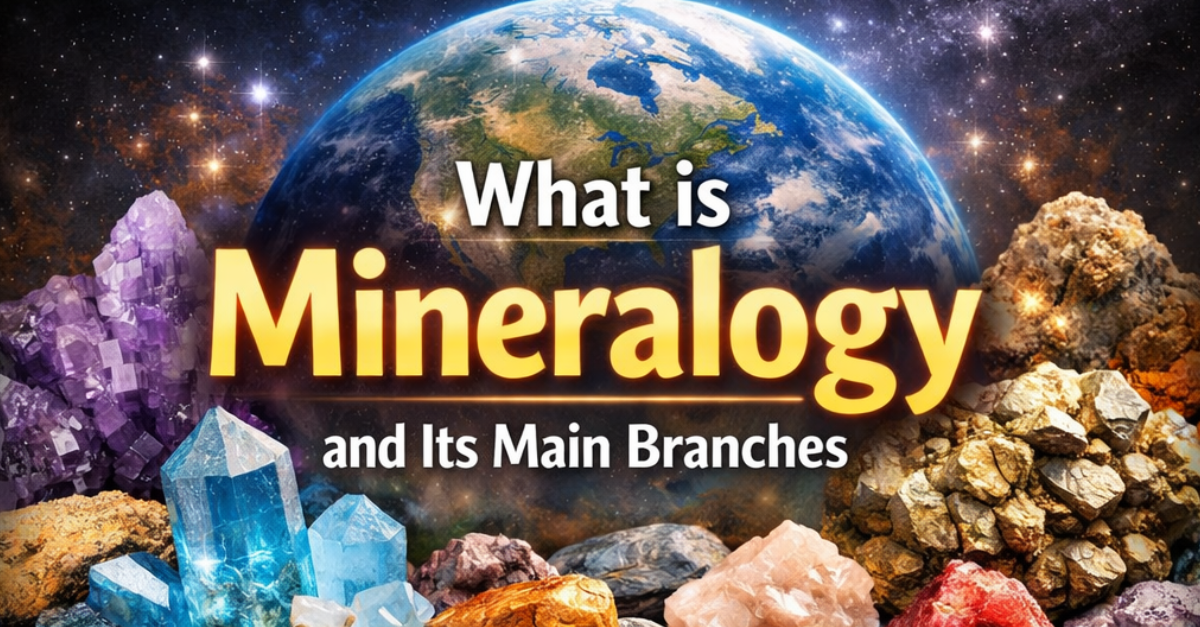
The Earth is made up of minerals, which act as its fundamental building blocks.They are naturally occurring, solid substances with a definite chemical composition and a specific atomic structure. Every rock, soil, and even the metals we use in daily life are made up of minerals. Studying minerals is essential not just for geologists but also for anyone who wants to understand how the Earth and its resources function.
Definition of Mineralogy
Mineralogy is the branch of science that explores minerals, focusing on how they form, what they are made of, their internal structure, and their characteristics.. This field helps us identify, classify, and understand minerals, as well as their uses in nature and industry. Without mineralogy, we would not know how to find essential resources like metals, gemstones, or even important nutrients needed for our health.
Importance of Minerals in Daily Life
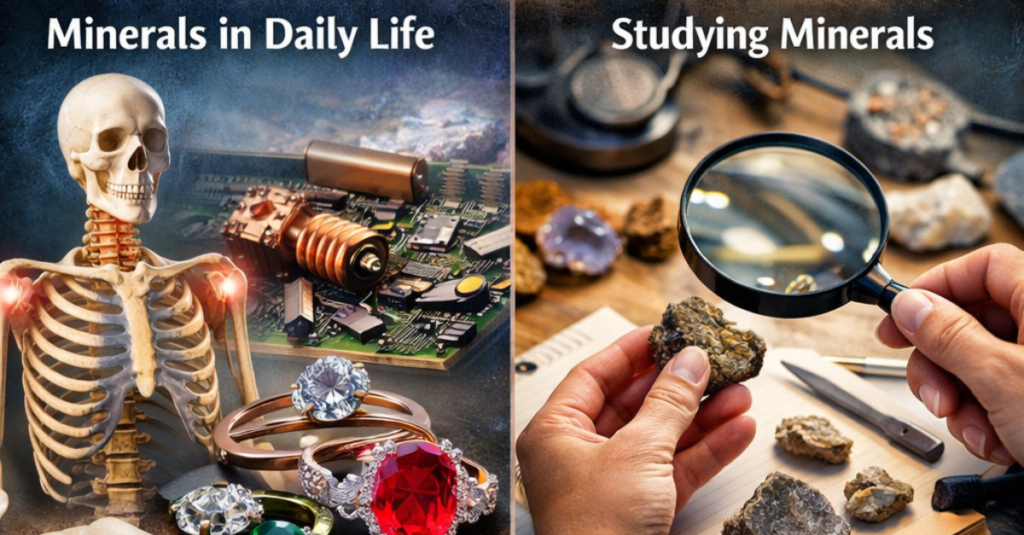
Minerals are all around us. They are not just found in rocks; they are part of the things we use every day: Health and Nutrition: Minerals such as calcium, iron, magnesium, and potassium are essential for our body’s growth, bone strength, and overall health.
Construction and Technology:
Minerals like quartz, feldspar, and mica are used in making buildings, electronics, and glass.
Jewelry and Art: Precious minerals like diamonds, rubies, and emeralds are highly valued in jewelry. Industrial Uses: Many minerals are raw materials in fertilizers, paints, and batteries.
Minerals are essential in our everyday life, from nutrition to construction and technology. This image illustrates the connection between studying minerals and their practical uses.
Main Branches of Mineralogy
Mineralogy is divided into several branches, each focusing on a different aspect of minerals:
Physical Mineralogy
This branch studies the physical properties of minerals that can be observed or measured directly. This includes: 1 Hardness 2 Color and luster (shine) 3 Cleavage and fracture (how minerals break) 4 Density and elasticity 5 Response to heat and electricity
Chemical Mineralogy
Chemical mineralogy focuses on the composition of minerals — what elements they contain and how these elements are combined. Scientists use laboratory techniques to test minerals chemically, often using tools like the blowpipe or other chemical tests to determine their composition.
Descriptive Mineralogy
In this branch, minerals are classified and described in detail. It records the physical and chemical properties of each mineral species, compares them with similar minerals, and documents where they are found in nature.
Occurrence of Minerals
This area study examines where minerals are found in nature, the types of rocks they are associated with, and how they form and are deposited. It also examines mineral associations — which minerals tend to occur together.
Conclusion
Mineralogy is more than just the study of rocks and stones. It links the Earth’s internal structure to its surface resources and shows how minerals play a vital role in our everyday lives. Whether it’s the calcium in our bones, the metals in our electronics, or the gemstones in our jewelry, understanding minerals helps us use the Earth’s natural resources more effectively.