What Is a Rock? Definition and Types

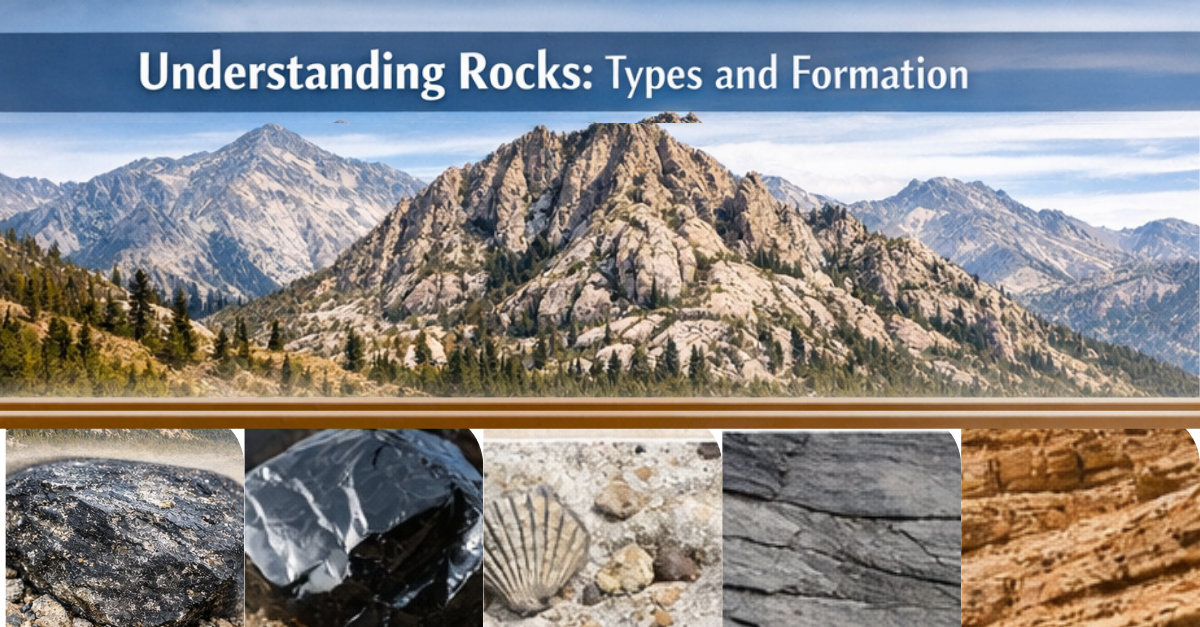
Rocks are one of the most fundamental components of the Earth. From the mountains we see on the horizon to the stones beneath our feet, rocks shape the planet’s surface and preserve its long geological history. Understanding what a rock is and how different types of rocks form helps us better understand Earth’s structure, natural resources, and environmental processes.

What Is a Rock?

A rock is a naturally occurring solid mass made up of one or more geological materials. These materials may include minerals, mineral-like substances, or organic components formed through natural Earth processes.

It is important to note that not all rocks are made entirely of minerals. Some rocks contain volcanic glass, fossils, or fragments of older rocks. This is why rocks are broader in definition than minerals.

In simple terms:

A rock is a solid natural material formed by geological processes over time.

How Rocks Form?

Rocks form through different natural processes such as cooling of molten material, accumulation of sediments, or transformation under heat and pressure. Based on how they form, rocks are classified into three main types:

  1. Igneous rocks
  2. Sedimentary rocks
  3. Metamorphic rocks

Each type tells a different story about Earth’s geological past.

Igneous Rocks:

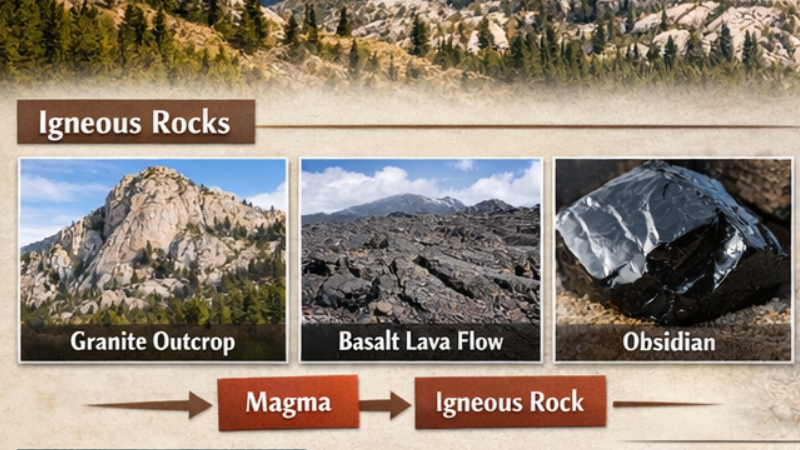
Igneous rocks develop when extremely hot, melted rock material cools down and becomes solid, either beneath the Earth’s surface or after flowing out as lava..

Diagram showing Marble and Slate transforming into metamorphic rocks under heat and pressure.
This diagram illustrates how pre-existing rocks transform into metamorphic rocks like Marble and Slate under heat and pressure.

Types of Igneous Rocks:

Igneous rocks are divided into two categories based on where they cool:

Intrusive igneous rocks

These rocks develop when magma cools gradually below the Earth’s surface. The slow cooling process gives crystals enough time to grow larger in size.

Example: Granite

Extrusive igneous rocks

These rocks are produced when lava solidifies rapidly after reaching the Earth’s surface. Because cooling happens so fast, crystals remain very small, and in some cases, the rock develops a glass-like texture.
Example: Basalt, Obsidian

Igneous rocks are important because they often form the foundation of continents and oceanic crust.

Sedimentary Rocks

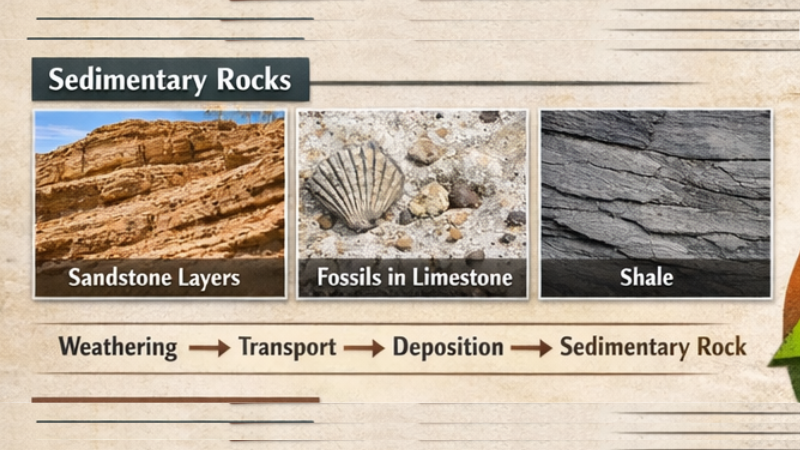
Sedimentary rocks form from sediments, which are particles of sand, clay, minerals, rock fragments, or organic material. These sediments are deposited by water, wind, or ice and gradually compacted and cemented over time.

untitled design (44)
This diagram illustrates the formation of sedimentary rocks, showing layers of Sandstone, Shale, and Limestone with fossils, along with the process of weathering, transport, deposition, and compaction into rocks.

How Sedimentary Rocks Form

The process includes :

  1. Weathering of existing rocks
  2. Transportation of sediments
  3. Deposition in layers
  4. Compaction and cementation

Types of Sedimentary Rocks:

Clastic sedimentary rocks:

Formed from fragments of other rocks. Example: Sandstone, Shale

Chemical sedimentary rocks:

Formed when minerals crystallize from evaporating water. Example: Rock salt, Gypsum

Organic sedimentary rocks:

These rocks originate from the accumulation of organic remains, including shells of marine organisms and preserved plant matter.
Example: Limestone, Coal

Sedimentary rocks often contain fossils, making them valuable for studying Earth’s past life and environments.

Metamorphic Rocks

Metamorphic rocks develop when pre-existing rocks undergo physical and chemical changes due to intense heat, pressure, and reactive fluids inside the Earth.

Diagram showing Marble and Slate transforming into metamorphic rocks under heat and pressure.
This diagram illustrates how pre-existing rocks transform into metamorphic rocks like Marble and Slate under heat and pressure.

Characteristics of Metamorphic Rocks

New minerals may form Texture and structure change Original rock features may be altered

Types of Metamorphic Rocks

Foliated metamorphic rocks

Have layered or banded textures due to pressure. Example: Slate, Schist

Non-foliated metamorphic rocks

Have a more massive structure without visible layers.
Example: Marble, Quartzite

Metamorphic rocks provide evidence of intense geological forces acting beneath the Earth’s surface.

The Rock Cycle

The Rock Cycle

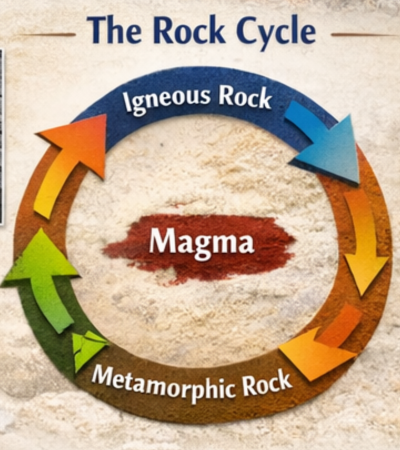
Rocks are not permanent in one form. Through geological processes, they continuously change from one type to another. This process is known as the rock cycle.

For example:

Igneous rocks can weather into sediments.
Sediments can become sedimentary rocks.
Sedimentary rocks can transform into metamorphic rocks.Metamorphic rocks can melt and form magma again.
The rock cycle shows that Earth is a dynamic system, constantly reshaping itself.

Importance of Rocks

Rocks play a vital role in both natural systems and human life.

  1. Geological Importance.
  2. Reveal Earth’s history.
  3. Help understand plate tectonics.
  4. Indicate past climates and environments.
  5. Economic Importance.
  6. Source of minerals and metals.
  7. Used in construction materials.
  8. Essential for mining and industry.
  9. Environmental Importance.
  10. Influence soil formation.
  11. Affect groundwater movement.
  12. Shape landscapes and ecosystems.
Illustration showing rocks used in construction, cement, glass, ceramics, and soil formation, representing their role in daily life.

Rocks in Daily Life

Although often overlooked, rocks impact everyday life in many ways:

  1. Roads and buildings use rock materials.
  2. Cement, glass, and ceramics originate from rocks.
  3. Fertile soils often develop from weathered rocks.

Understanding rocks helps us manage natural resources more responsibly

Conclusion

Rocks are more than just solid objects found in nature. They are records of Earth’s formation, transformation, and evolution. By studying what rocks are and how they are classified, we gain insight into geological processes that shape our planet. From fiery volcanoes to quiet sediment layers, every rock tells a story—one that connects Earth’s past with its present and future.

Leave a Reply

Your email address will not be published. Required fields are marked *