Why Water is Essential for Life on Earth

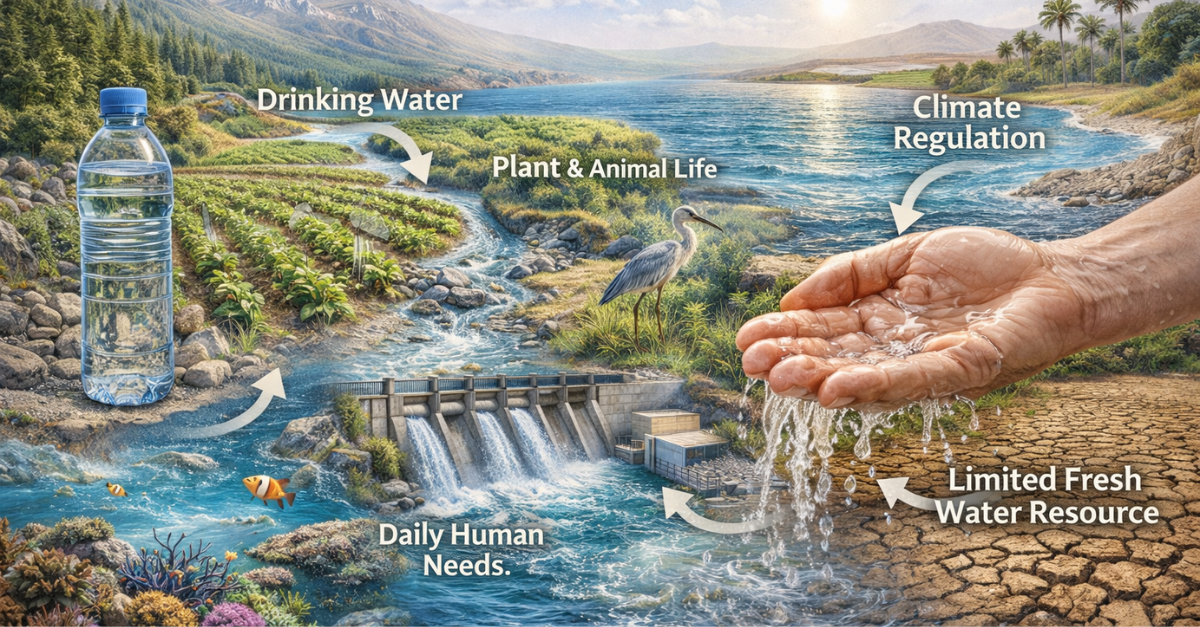
Water is one of the most basic yet powerful resources on Earth. Every living thing — from the smallest plant to the largest animal — depends on water to survive. Life on Earth cannot continue in the absence of water. But water is important not just because we drink it; its role in nature, climate, and daily life is much deeper.
Understanding why water is essential helps us realize why protecting and managing it is so important.
Water as the Foundation of Life
- Water forms a major part of every living body on Earth.
- The human body is made up of more than half water.
- Plants need water to grow, produce food, and survive.
- Animals depend on water directly for drinking and indirectly through plants and prey.
Example:
When plants lack sufficient water, they lose strength and may not survive. It wilts and eventually dies. Similarly, humans can survive weeks without food but only a few days without water.
Water and Plant Life
- Plants use water for several vital processes:
- Transporting nutrients from soil to roots and leaves.
- Producing food through photosynthesis.
- Maintaining structure and strength.
- Without water, plants cannot make food, and without plants, entire food chains collapse.
Example:
Crops like wheat and rice depend on regular water supply. Lack of water leads to crop failure, food shortages, and hunger.
Water and Animal Survival
Animals rely on water in many ways:
- Drinking to maintain body functions
- Living in water environments such as rivers, lakes, and oceans
- Depending on plants and other animals that need water
Example:
Fish cannot survive if rivers dry up or become polluted. When aquatic life dies, birds and animals that depend on them are also affected.
Water as a Regulator of Climate
Water plays a major role in controlling Earth’s climate:
- Large water bodies take in heat at a slow rate and give it back over time.
- This reduces extreme temperatures
- Water movement helps transfer heat around the planet
Example:
Coastal areas usually have milder weather compared to deserts because nearby oceans regulate temperature.
Water and the Natural Environment
Water shapes Earth’s surface and ecosystems:
- Rivers carve valleys and shape landscapes.
- Wetlands support biodiversity
- Lakes and rivers create habitats for plants and animals.
Example:
Wetlands act like natural sponges, absorbing excess rainwater and reducing flood damage.
Water for Human Daily Needs
Water is deeply connected to daily human life:
- Drinking and cooking
- Cleaning and sanitation
- Agriculture and food production
- Industry and energy generation
Example:
Hydroelectric power uses flowing water to generate electricity, providing energy without burning fuel.
Water and Health
Clean water is essential for good health:
- Prevents dehydration
- Supports digestion and circulation
- Reduces the spread of disease when properly managed
Example:
Communities without access to clean water often suffer from water-borne diseases, showing how vital safe water is for survival.
Water as a Limited Resource
Although water covers much of the Earth, usable fresh water is limited.
- Most water is salty and unsuitable for drinking
- Fresh water is unevenly distributed
- Pollution and overuse reduce availability
Example:
Some regions experience floods, while others struggle with drought, highlighting the need for careful water management.
Human Responsibility Toward Water
Because water is essential for life, humans must:
- Use water wisely
- Prevent pollution
- Protect rivers, lakes, and groundwater
Example:
Saving water at home and avoiding waste may seem small, but collectively it helps preserve water for future generations.
Conclusion
Water is not just a natural resource — it is the foundation of life on Earth. It supports living organisms, regulates climate, shapes landscapes, and sustains human societies. Every drop of water plays a role in maintaining balance in nature. Understanding the importance of water helps us respect it, protect it, and ensure that life on Earth continues to thrive.