Structural Geology: Definition & Importance

What is Structural Geology?
Structural Geology is the study of rock structures, their deformation, and three-dimensional arrangement in the Earth’s crust. It explores how rocks fold, fracture, and layer over time due to forces such as stress, pressure, and tectonic movements.
Understanding these structures helps geologists predict natural hazards, plan engineering projects, and extract resources safely, such as minerals, oil, and gas.
Rocks in the Earth’s crust are not static; they are constantly responding to stress.
They bend, break, and form patterns that reflect Earth’s dynamic history. Structural Geology provides the tools to read these patterns, visualize them in three dimensions, and apply this knowledge in real life.
Why is Structural Geology Important?
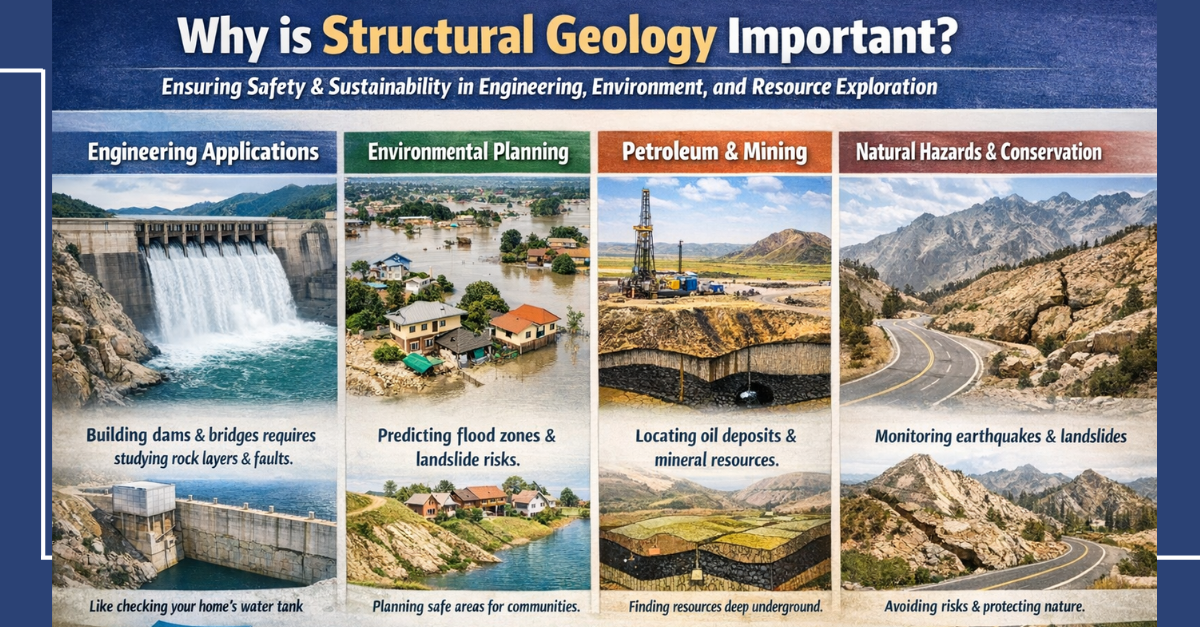
Structural Geology has practical applications across multiple fields. From building dams and bridges to understanding earthquake hazards and planning mineral extraction, it ensures that human activities are safe and sustainable.
Without knowledge of rock structures, engineers, planners, and geologists would face higher risks of failure, accidents, or environmental damage.
Key Areas of Importance
1. Engineering Applications
Structures like dams, bridges, highways, and power plants are often built on or inside rock formations. Understanding the strength, orientation, and faults in rocks is critical for stability.
Example:
A dam stores and controls water from a river.
Engineers study the rock layers beneath the dam, similar to checking the foundation of a home water tank, ensuring it can hold water safely without cracking or leaking.
Without proper analysis, the structure could fail under pressure, leading to catastrophic consequences.
2. Environmental Planning
- Structural Geology is essential for environmental safety and sustainable planning.
- It helps identify earthquake-prone areas, landslides, and flood zones.
- It informs land use planning, ensuring that buildings, roads, and other infrastructure are safe.
- Helps in conservation of minerals and hydrocarbon resources.
Example:
Studying river layers, sediment deposition, and floodplains allows planners to predict flooding events and avoid construction in high-risk areas.
Communities benefit from safer planning decisions, which reduce loss of life and property.
3. Petroleum & Mining Industries
Mining and petroleum exploration depend heavily on structural geology.
Rock layers, faults, and folds directly affect where resources are located.
Correct analysis ensures safe extraction and avoids dangerous conditions underground.
Example:
Before drilling for oil, geologists study subsurface folds and faults to predict where oil reservoirs exist.
This prevents accidents and increases efficiency, saving time, money, and lives.
4. Natural Hazards & Conservation
Rocks respond to natural forces in ways that affect human life. Understanding these stress patterns and fault lines helps mitigate natural disasters.
Structural geologists can predict earthquakes, landslides, and volcanic eruptions.
This knowledge also helps protect mineral and hydrocarbon resources, ensuring sustainable use.
Example:
Monitoring active faults in a mountainous region can guide evacuation plans or influence the design of roads and tunnels to withstand earthquakes
Real-Life Examples to Visualize Concepts
To help students understand, it’s useful to connect structural geology with everyday examples:
Dam Example:
Engineers check rock layers and fault lines before building a dam, similar to checking your home water tank foundation. This ensures the dam stores water safely and efficiently.
River Example:
Observing sediment layers along rivers helps predict flood risks and plan safe picnic spots or settlements. It also shows erosion patterns caused by water flow.
Mountain Example:
Folded rocks in mountains show stress patterns over millions of years. Observing these formations helps students connect theory to natural landscapes.
Oil & Mining Example:
Underground rock folds indicate where minerals or oil can be found. This ensures efficient and safe extraction, avoiding unnecessary drilling or accidents.
Key Points to Remember
Rocks have specific shapes, layers, and arrangements
Folds, faults, and stress patterns affect engineering, mining, and environmental safety.
Structural Geology is essential for engineering, resource planning, and hazard mitigation.
Using daily-life examples makes complex concepts easier to understand.