Rock Cycle with Iron: Simple Science Guid

Introduction
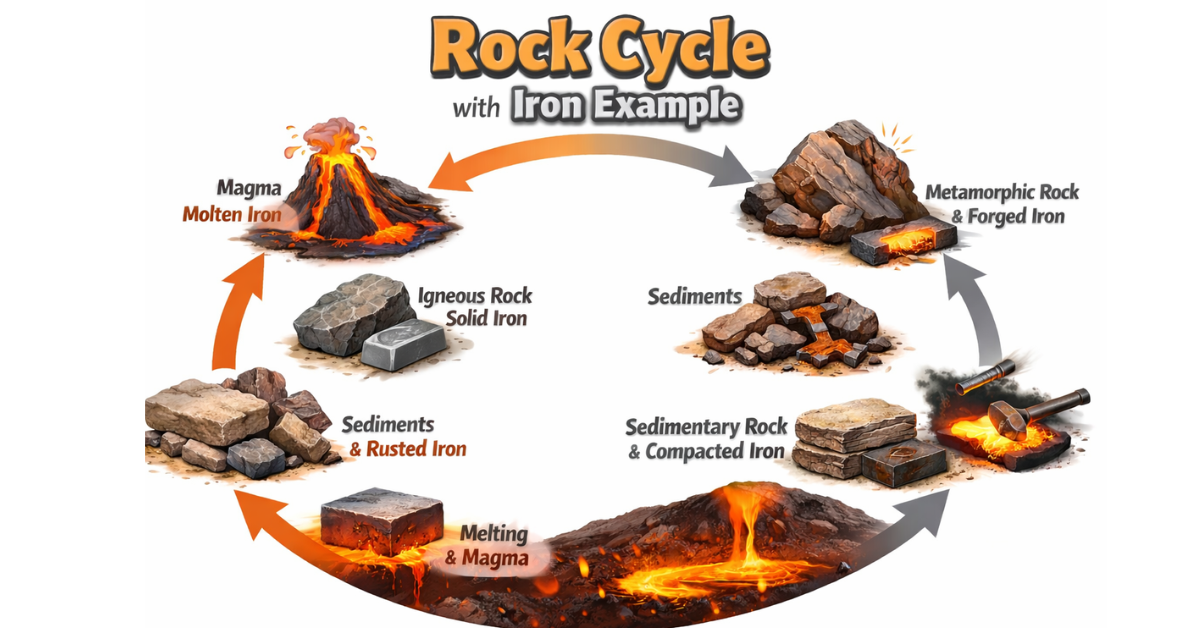
The rock cycle is a natural process where rocks change form over millions of years; iron can be used as an example to illustrate these changes.
Note: The iron example is used only for understanding. Rocks and iron are different materials.
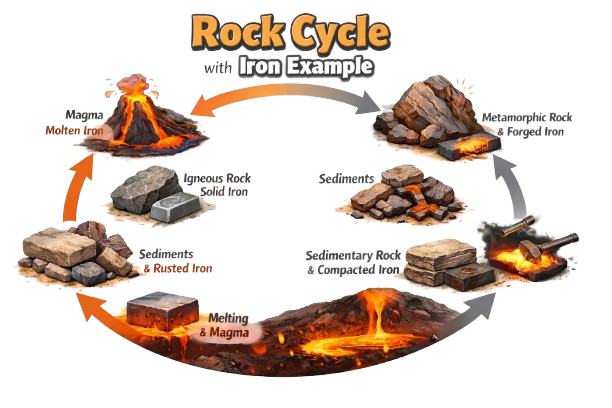
Magma and Igneous Rocks
Inside the Earth, rocks exist in a molten state called magma due to extremely high temperatures. When magma cools and solidifies, it forms igneous rocks such as granite and basalt.
Similarly, in a factory, molten iron cools and becomes solid iron. This analogy helps explain how igneous rocks form from magma in the Earth.
Weathering, Erosion, and Sediments
Igneous rocks exposed to rain, wind, and temperature changes gradually crack and break into small pieces called sediments. This process is called weathering, while the movement of these particles is known as erosion.
Iron left in open air rusts and breaks over time, similar to how rocks slowly break into sediments.
Sedimentary Rocks
Sediments carried by rivers and seas accumulate in layers. Over time, pressure from upper layers and natural cementation turn sediments into sedimentary rocks like limestone, chalk, and sandstone.
Similarly, small iron pieces under pressure can form a solid block, illustrating how loose sediments become solid rocks
Metamorphic Rocks
When sedimentary or igneous rocks move deeper into the Earth, they experience high heat and pressure. These conditions change the rock’s structure and minerals without melting it, forming metamorphic rocks such as marble from limestone.
This is like forging iron, where solid iron is heated and pressed to change its shape and strength.
Melting and Return to Magma
If metamorphic rocks go even deeper, extreme heat melts them back into magma. Later, this magma can cool to form new igneous rocks, completing the rock cycle.
Similarly, forged iron melts again when heated to very high temperatures, returning to its molten state.
Conclusion
The rock cycle is a natural and continuous process where rocks are formed, transformed, and reformed over time. Using iron as an analogy, we can understand how rocks melt, cool, break, experience pressure, and reshape over time. This simple guide makes learning the rock cycle easy, clear, and scientific.
Reminder: Iron is used here as an example for understanding. Rocks and iron are different materials.